
When you need to find aircraft maintenance providers or get your own shop in front of the right audience, scattered listings and outdated directories make the process frustrating. The ability to list aviation maintenance shop online effectively is not just a marketing exercise. It directly affects safety, compliance, and operational continuity for aircraft owners and operators. With 3,135 verified aircraft maintenance companies operating across the U.S. as of 2026, standing out in a crowded field requires more than a basic web entry. This guide walks you through exactly what to prepare, where to list, and how to verify that any shop you find or promote meets the standards aviation demands.
Table of Contents
- Key Takeaways
- How to list aviation maintenance shops online: what to prepare first
- Step-by-step process to create an effective listing
- Common mistakes that undermine your listing
- How to verify listings and confirm shop credibility
- My perspective on online listings and aviation safety
- Find and list maintenance shops with Nearbyflyer
- FAQ
Key Takeaways
| Point | Details |
|---|---|
| Certifications come first | FAA Part 145 authorization is the baseline credential any listing must display to earn trust. |
| Platform choice matters | Niche aviation directories outperform generic business listings for reaching qualified aircraft owners. |
| Accuracy prevents lost business | Outdated contact details and expired credential info are the top reasons inquiries go unanswered. |
| Verification is non-negotiable | Cross-referencing FAA databases confirms a shop's authorization before any maintenance work begins. |
| Nearbyflyer simplifies discovery | An interactive airport map connects maintenance providers with pilots across 73 airports in one place. |
How to list aviation maintenance shops online: what to prepare first
Before you submit a single listing, you need to have your documentation and business profile in order. Aviation is a regulated industry, and any platform worth using will expect proof of credentials before publishing your shop to the public.
Certifications and regulatory credentials
The most critical credential for any repair station is FAA Part 145 authorization. This certification determines which aircraft types and systems your shop is legally permitted to service. Without it displayed prominently in your listing, you will lose credibility with every aircraft owner who knows what to look for. Individual mechanics should also note their IA (Inspection Authorization) status, which qualifies them to approve aircraft for return to service after major repairs.
Here is what you need to gather before creating any listing:
- FAA Part 145 repair station certificate number and ratings
- IA credentials for individual mechanics, if applicable
- Business license and state registration documents
- Proof of liability insurance coverage
- A current list of aircraft types and systems your shop is rated to service
- Physical address, phone number, and a dedicated maintenance inquiry email
- Operating hours, including any AOG (Aircraft on Ground) emergency availability
Pro Tip: Photograph your FAA certificate and keep a digital copy ready. Many platforms allow or require certificate uploads, and having it on hand speeds up the submission process considerably.
Understanding the platforms available
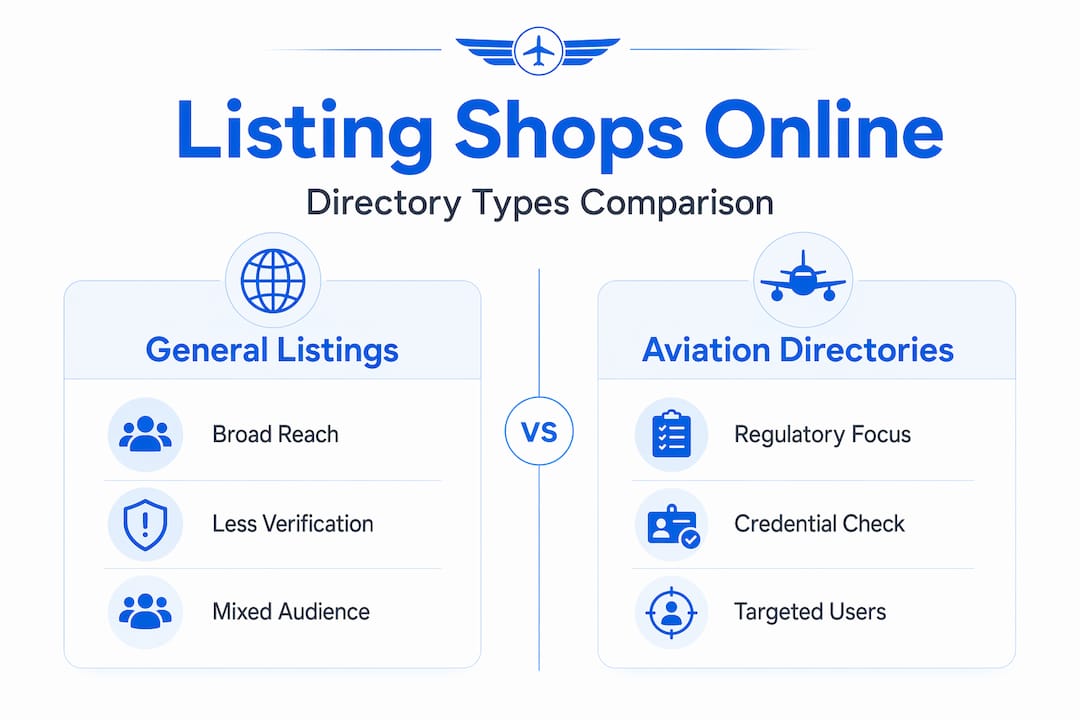
Not all directories serve the same purpose. The table below compares the main categories of online options for aviation maintenance listings.
| Platform Type | Best For | Verification Level | Audience Reach |
|---|---|---|---|
| FAA-linked databases | Regulatory compliance checks | High | Inspectors, operators |
| Niche aviation directories | Certified shop discovery | Medium to high | Pilots, aircraft owners |
| Global MRO marketplaces | Large-scale commercial MRO | Medium | Airlines, fleet operators |
| Generic business directories | Basic local visibility | Low | General public |
Specialized niche databases like aviation-specific directories provide verified regulatory credentials and are strongly preferred over generic business listings by experienced aviation professionals. Generic platforms like general business review sites rarely verify credentials, which means your listing sits alongside uncertified operations with no way for a searcher to tell the difference.
Step-by-step process to create an effective listing
Once your documentation is ready, the actual listing process is straightforward if you follow a clear sequence. Cutting corners here is where most shops lose potential clients before the first phone call.
-
Choose the right platform first. Start with aviation-specific directories and niche databases before considering generic options. Platforms that cater specifically to pilots and aircraft owners will deliver far more qualified inquiries. Nearbyflyer's airport services map covers 73 airports with an interactive format that lets users explore maintenance options by clicking directly on airport locations.
-
Create a complete business profile. Fill out every field the platform offers. Incomplete listings rank lower in search results and signal to potential clients that the shop may be equally careless about maintenance records. Include your shop name, physical address, all phone numbers, email, website, and a clear description of your service capabilities.
-
Write a specific services description. Generic phrases like "full-service maintenance" tell a pilot nothing useful. List the specific aircraft makes and models you service, the types of inspections you perform (annuals, 100-hour, avionics), and any specialty work like engine overhaul or sheet metal repair. Maintenance service listings often require detailed aircraft information for accurate quoting, so pre-empting that with specifics in your description reduces back-and-forth.
-
Upload supporting documentation and photos. Photos of your facility, equipment, and completed work build trust faster than any written description. Include your FAA certificate image if the platform supports uploads. Platforms like Locatory connect over 25,000 active members globally and support detailed capability profiles for MRO providers.
-
Set up your inquiry process. Decide how you want to receive leads. Some platforms use a request-for-quote model where clients submit aircraft details before you provide pricing. Others route direct calls or emails. Match your inquiry setup to how your shop actually operates so you can respond quickly.
-
Submit and confirm your listing. After submission, most platforms send a confirmation or require a verification step. Complete it immediately. A listing stuck in pending status is invisible to searchers.
-
Schedule regular updates. Set a calendar reminder every 90 days to review your listing. Check that contact information is current, certifications are up to date, and your services list reflects what you actually offer. Choosing a maintenance supplier requires reviewing certifications and long-term reliability, and an outdated listing signals neither.
Pro Tip: Add your listing to Nearbyflyer by visiting the submit a listing page directly. The process is built specifically for aviation service providers and places your shop in front of pilots actively searching at specific airports.
Common mistakes that undermine your listing
Most listing failures come down to the same handful of errors. Knowing them in advance saves you from watching qualified leads disappear without explanation.
- Listing expired or incorrect certification numbers. This is the fastest way to lose a serious aircraft owner. Regulatory authorization determines service eligibility and trust, and a wrong certificate number flags your shop as either careless or non-compliant. Accurate certification details in listings are critical since Part 145 authorization directly determines what work you can legally perform.
- Using a general inbox for maintenance inquiries. Routing aviation maintenance requests to a shared company email guarantees delays. Create a dedicated address and check it daily.
- Ignoring platform-specific formatting rules. Some directories have character limits on descriptions, specific fields for aircraft ratings, or required photo dimensions. Ignoring these rules results in truncated listings or outright rejection.
- Failing to respond to reviews or client feedback. Aircraft owners talk to each other. A shop that ignores negative feedback or never acknowledges positive reviews appears indifferent. A brief, professional response to any review builds more credibility than the review itself.
- Skipping the verification step after submission. Many shops submit their listing and assume it goes live automatically. It often does not. Check your email for confirmation requests and complete them within 24 hours.
Data accuracy can be inconsistent across large-scale directories. Aviation professionals consistently cross-reference FAA and trade association databases to verify shop authorizations before committing to any maintenance work. Source
How to verify listings and confirm shop credibility
Finding an aviation maintenance shop online is only half the job. Confirming that the shop is actually certified and capable of performing the work you need is where safety-conscious operators separate themselves from those who learn lessons the hard way.
The comparison below shows the most reliable verification methods and what each one confirms.
| Verification Method | What It Confirms | Time Required | Reliability |
|---|---|---|---|
| FAA Repair Station search | Part 145 certification and ratings | Under 5 minutes | Very high |
| FAASTeam directory | Instructor and IA credentials | Under 5 minutes | Very high |
| AOPA database | Member shop reputation data | 5 to 10 minutes | High |
| Platform vetting process | Basic credential review | Varies by platform | Medium to high |
| Direct certificate request | Current certificate validity | 1 to 2 business days | Very high |
Cross-referencing FAA and industry association databases is the most reliable method for confirming that a maintenance shop holds current authorization. The FAA's online repair station search tool is free, takes under five minutes, and tells you exactly what ratings a shop holds and whether its certificate is active.

Beyond the FAA search, ask the shop directly for a copy of their current certificate. A legitimate repair station will provide it without hesitation. If a shop deflects that request, treat it as a serious red flag regardless of how polished their online listing appears.
Digital platforms now enable real-time stock and price visibility, which has made it easier to evaluate maintenance providers before ever making contact. Shops that display current parts availability, pricing transparency, and detailed capability profiles are signaling operational maturity. Those that offer only a phone number and a vague description are not.
My perspective on online listings and aviation safety
I've spent enough time around aviation maintenance to know that the gap between a shop's online presence and its actual capabilities can be significant. What I've learned is that a polished listing is not the same as a qualified shop, and aircraft owners who confuse the two eventually pay for it.
What I find genuinely encouraging is how niche aviation directories have raised the bar. When a platform requires certificate verification before publishing a listing, it filters out the shops that have no business working on aircraft. That vetting step is worth more than any five-star review.
The uncomfortable truth I've come to accept is that investing in workforce quality and technical training is what actually separates the best maintenance operations from the rest, and that rarely shows up in a listing. You have to dig for it. Ask about technician certifications, training programs, and how the shop handles recurring airworthiness directives. The answers tell you more than any directory entry ever will.
My prediction for where this is heading: platforms that combine real-time FAA data with user reviews and verified credentials will become the standard. The shops that invest in maintaining accurate, complete, and current online profiles now will be the ones that dominate search results when that shift happens. The ones that treat their listing as a one-time task will be invisible.
— Bryce
Find and list maintenance shops with Nearbyflyer
If you are ready to connect your shop with pilots actively searching for certified maintenance services, Nearbyflyer is built for exactly that purpose.
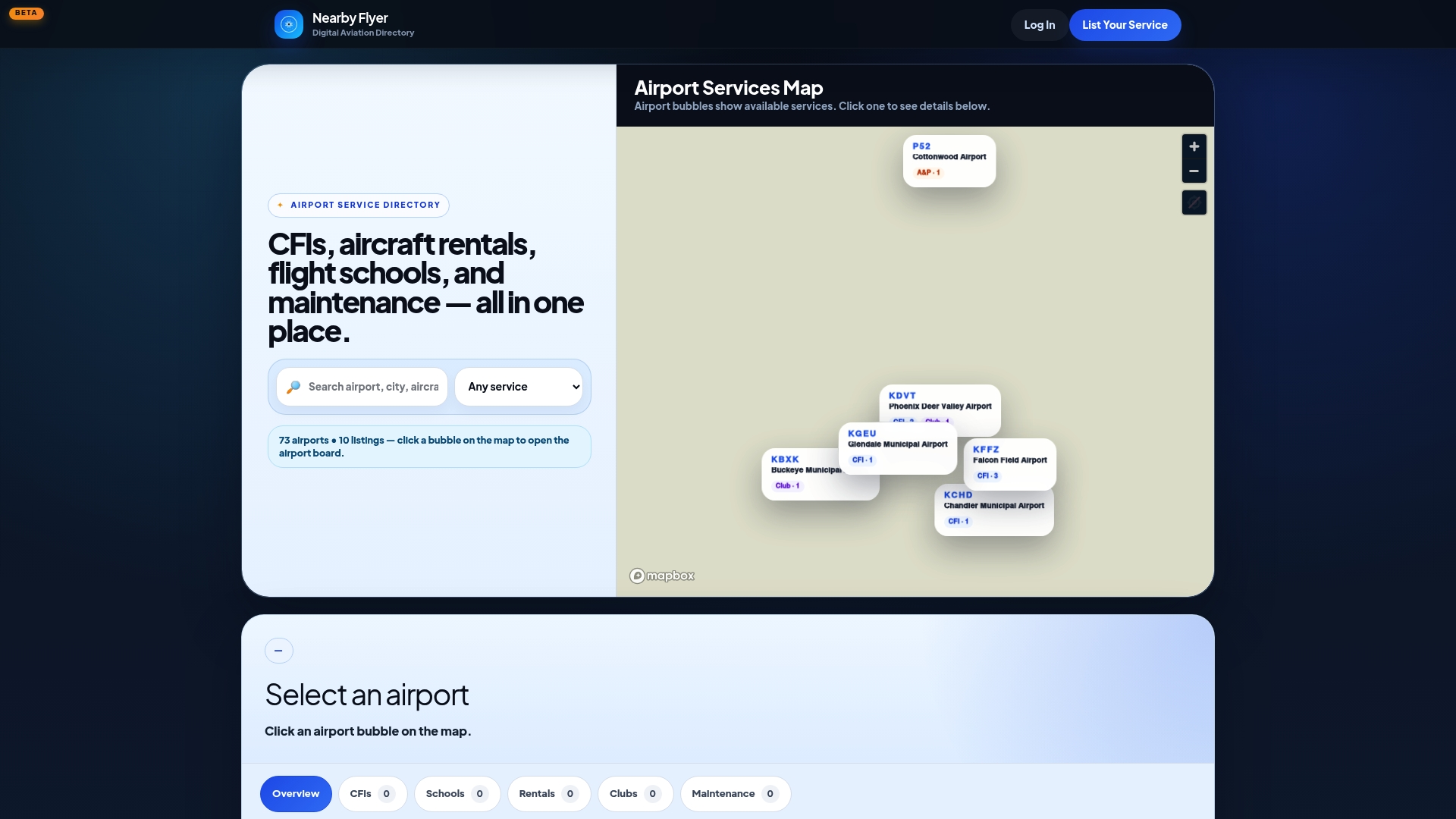
Nearbyflyer's airport service directory covers 73 airports with an interactive map that lets pilots click directly on airport locations to find maintenance providers, flight schools, and aircraft rentals in one place. For maintenance shops, it means your listing reaches a qualified audience of aircraft owners and operators who are already in search mode. You can explore how an active listing looks by checking out a verified maintenance provider already on the platform. When you are ready to add your shop, the submit your listing page walks you through the process in minutes. For pilots searching near specific airports, pages like Taylor Airport (KTYL) show exactly what local maintenance options look like in practice.
FAQ
What certifications should an aviation maintenance shop list online?
Any shop listing online should prominently display its FAA Part 145 repair station certificate number and ratings. Individual mechanics should also include their IA (Inspection Authorization) credentials if applicable.
How do I verify that an online aviation maintenance listing is legitimate?
Use the FAA's free online repair station search tool to confirm that the shop holds a current Part 145 certificate with the ratings matching the work you need. You can also request a copy of the certificate directly from the shop.
Which platforms are best for listing an aviation maintenance shop?
Niche aviation directories and airport-specific platforms deliver more qualified inquiries than generic business listings. Platforms like Nearbyflyer that are built specifically for aviation professionals and verified against airport locations provide the most relevant audience reach.
How often should I update my aviation maintenance shop listing?
Review and update your listing at minimum every 90 days. Check that certification numbers, contact details, service descriptions, and operating hours are current. Outdated listings lose credibility and inquiries.
What information do aircraft owners need from a maintenance shop listing?
Aircraft owners look for the shop's FAA certificate ratings, specific aircraft types and systems serviced, contact information with response time expectations, facility photos, and any AOG emergency availability. The more specific the listing, the more qualified the inquiries it attracts.